Your shopping cart is empty
Ultimate guide: why you shouldn’t shave your dog this summer?
- August 04, 2026

With the arrival of high temperatures, many pet parents wonder whether shaving their dog can help them cope with the heat. Although it may seem like a logical solution, removing too much hair doesn’t always cool the animal and, with certain coat types, it can leave the skin exposed to the sun and disrupt the hair’s natural regrowth.
A dog’s coat is part of its protection system against external factors such as solar radiation, moisture, dirt and temperature changes. That’s why, before doing a very short cut, it’s important to identify the coat type and consult with a professional dog groomer or a veterinarian.
In this guide we explain why hair can be a great ally during summer and how to keep it clean, aerated and free of dead undercoat with the right routine and specific products from Artero Pet Care.
The coat as a natural protective barrier
Dogs’ skin isn’t designed to remain fully exposed to the sun for long periods. The hair creates a physical barrier that helps reduce direct contact with ultraviolet radiation and protects against chafing, dirt and insects.
In double-coated dogs, the coat is made up of two types of hair:
- Topcoat: longer and more resilient, it protects against the sun, moisture and other external agents.
- Undercoat: finer and denser, it helps with thermal insulation and renews especially during shedding seasons.
Between both layers, an air pocket helps with insulation. However, for the coat to function properly, it must be clean, tangle-free and free of excessive buildup of dead undercoat.
Why shaving double-coated dogs isn’t recommended
Breeds such as the Siberian Husky, German Shepherd, Akita, Chow Chow, Golden Retriever or Pomeranian have a double coat that should not be shaved for purely aesthetic or seasonal reasons.
An excessively short cut can remove the topcoat and leave the skin more vulnerable. In addition, the undercoat and guard hair don’t always grow back at the same rate, so the coat’s look and texture can take a long time to recover.
Greater sun exposure
When the hair is cut too short, solar radiation reaches the skin more easily. This can increase the risk of irritation and burns, especially in dogs with light skin, white hair, or areas with lower coat density.
Changes in hair growth
In some double-coated dogs, shaving can temporarily alter the growth cycle. The undercoat may return before the topcoat, leaving an uneven coat that’s woollier or harder to maintain.
Less protection from the environment
The coat also protects against insects, branches, dirt and environmental changes. By removing it almost completely, the skin is more exposed during walks and outdoor activities.
Possible changes in body perception
Some dogs may feel uncomfortable after an abrupt change in hair length. This doesn’t happen in every case, but it’s another reason to avoid extreme transformations without a medical or professional need.
Does this mean you can never trim hair in summer?
No. The recommendation depends on the coat type, its condition and the dog’s individual needs. Continuous-growing dogs, such as the Poodle, the Bichon, or certain water dogs, may need regular trims to keep the coat manageable and prevent mats.
The difference is between doing a technical coat-appropriate trim and shaving the dog down until the skin is practically exposed. A dog groomer can assess what length helps maintain hygiene and comfort without removing the necessary protection.
Shaving may also be necessary for veterinary reasons, for certain procedures or when the coat is so matted that it can’t be restored without causing pain. In these cases, it should be done following a professional’s criteria.
The key to summer care: brushing and undercoat removal
To help your dog get through summer, the solution usually isn’t to remove the entire coat, but to remove dead hair that prevents proper ventilation.
Knots and undercoat buildup compact the coat, retain moisture and make it harder for air to pass through. Regular brushing helps keep the coat looser, cleaner and functional.
How to brush correctly
Brushing should be done in sections, from the roots to the tips, without working only the surface layer. In dense coats it may be necessary to part the hair with one hand while brushing layer by layer to reach the undercoat.
After brushing, a comb helps check that no hidden tangles remain. You can check the selection of Artero dog brushes and professional combs to choose the right tool based on the coat type and density.
Deshedding during shedding season
Double-coated dogs often shed heavily, especially when temperatures change. During these times, deshedding helps remove undercoat that has already loosened but remains trapped within the coat.
This work should be done gradually and without scraping the skin. When there’s a large buildup of undercoat, it’s best to visit a dog grooming salon for a professional bath, blow-out and deshedding.
Artero products to protect the coat during summer
Keeping the coat clean, loose and protected requires the right combination of grooming products and tools. These products can help care for the coat during the months of greatest sun and heat exposure.
Artero Block: protection from sun exposure
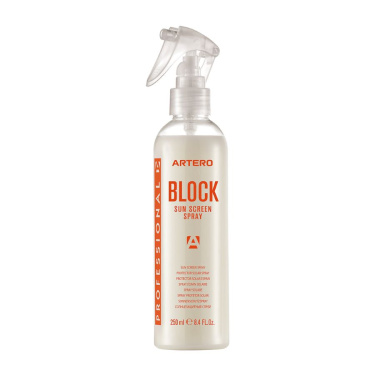
Artero Block is a spray sunscreen for pets, designed to protect the hair from the effects of UV and infrared rays.
It can be applied before a walk, paying special attention to the upper areas and the tips of the coat. It’s also useful for dogs with sparsely covered areas or that have needed a shorter cut, always following the instructions for use.
Shampoo for double-coated dogs
Dense coats need a cleanse that reaches the undercoat without stripping the skin. In these cases, a specific grooming formula can be used to help remove dirt, oils and trapped particles.
Check our guide on how to choose a shampoo for double-coated dogs, where we explain coat characteristics and the proper bathing and drying protocol.
Shampoo and grooming products by coat type
Not all dogs need the same product. A harsh coat should retain its texture, while a long or curly coat may need more hydration and elasticity.
Before choosing, consider whether the coat is short, long, curly, harsh or double-coated. You should also take into account the skin condition, bathing frequency and the level of dirt.
Professional grooming tools
The right tool helps remove dead hair and open up the coat without unnecessary pulling. In the Artero grooming tools section you’ll find brushes, slickers, combs and deshedding tools suited to different coat types.
Additional tips to help cool your dog
Coat maintenance is important, but it should be part of a broader strategy to protect your dog from the heat.
- Avoid the hottest hours: schedule walks early in the morning or late in the afternoon.
- Offer fresh water: make sure they have constant access to clean water and bring a portable water bowl on outings.
- Look for shaded areas: avoid prolonged sun exposure and surfaces that store too much heat.
- Check the paw pads: asphalt can reach dangerous temperatures and cause burns.
- Don’t cover them with damp towels for too long: they can trap heat. It’s better to use cool water, ventilation and shade.
- Dry the coat well: after the beach, the pool or a bath, remove trapped moisture, especially in dense coats.
When should you see a professional?
Consult a dog groomer before making a major change if you’re not sure what type of coat your dog has. A professional can assess density, skin condition, the presence of tangles and the shedding cycle.
You should also see the veterinarian if you notice severe redness, burns, unusual hair loss, wounds, persistent itching or signs of heatstroke.
Conclusion: this summer, care for the coat instead of removing it
Shaving a dog is not a universal solution to heat. In double coats, it can remove an essential part of their protection, expose the skin to the sun and affect subsequent hair regrowth.
The safest strategy is to keep the coat clean, free of tangles and without accumulations of dead undercoat. Brushing, deshedding, suitable grooming products and professional assessment help preserve the coat’s natural function while helping your dog face summer more comfortably.
Before reaching for the clippers, remember that every coat is different. Consulting a dog groomer or veterinarian can prevent a decision that’s hard to fix and help you choose the care your dog truly needs.

Share on Facebook

Share on X

Share on Pinterest
Related Products
Comment(s)
Recent Posts

Popular Posts